Press Kit
Everything you need in one place — author bios, book details, headshots, and speaker resources.
Thank you for helping share these stories. I’ve gathered bios, photos, and background information here to make it easy to feature my work. Please reach out if you need anything that isn’t included below.
— Rebecca Lemov
On This Page
Logo Assets
SVG files are available via the links below. For PNG files, click an image to view it larger, then right-click to download.



Author Assets
For journalists, reviewers, and media partners, here are the essentials about my books and background — ready to copy, quote, or download
Short Author Bio
Rebecca Lemov is a professor, researcher, and author whose work uncovers hidden systems of control, influence, and belief. She writes about the history of brainwashing, psychological experimentation, and the subtle ways technology shapes human behavior. Her books bring decades of research into vivid stories that connect past experiments to today’s cultural shifts, offering clarity, context, and a touch of humor in an age of instability, targeted messaging, and manipulation.
Extended Author Bio
Rebecca Lemov is a historian of the behavioral sciences and professor at Harvard whose research traces the hidden systems shaping thought and behavior. For more than two decades, she has studied brainwashing, coercive persuasion, and the evolving relationship between psychology and technology.
Her books — The Instability of Truth, World as Laboratory, Database of Dreams, and the co-authored How Reason Almost Lost Its Mind — open archives of forgotten experiments, from Cold War mind control projects to some of the most ambitious attempts to catalog humanity itself. These stories reveal how scientific ambition, surveillance, and media technologies combined to create new forms of influence — and how those forces continue to affect our world today.
Through her writing, Rebecca blends deep research with accessible storytelling, making obscure histories not only comprehensible but urgently relevant. Her work equips readers with historical and ethical tools for navigating a confusing digital landscape, helping them to recognize manipulation while also staying curious, grounded, and engaged.
Author Photos
Click an image to enlarge. Right-click and select “Save image” to download.




Book Information
Click an image to enlarge. Right-click and select “Save image” to download.
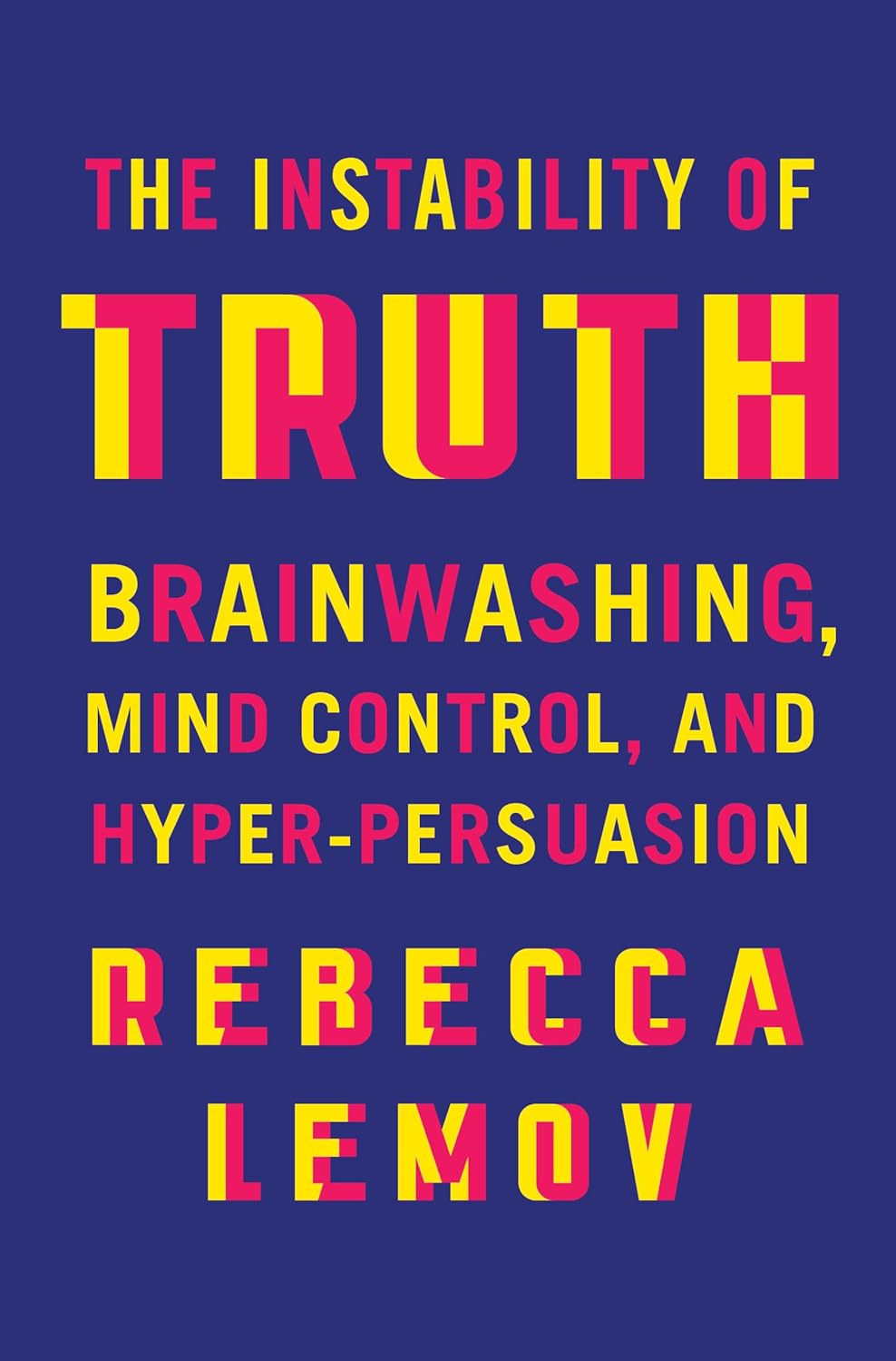
The Instability of Truth
Brainwashing, Mind Control, and Hyper-Persuasion
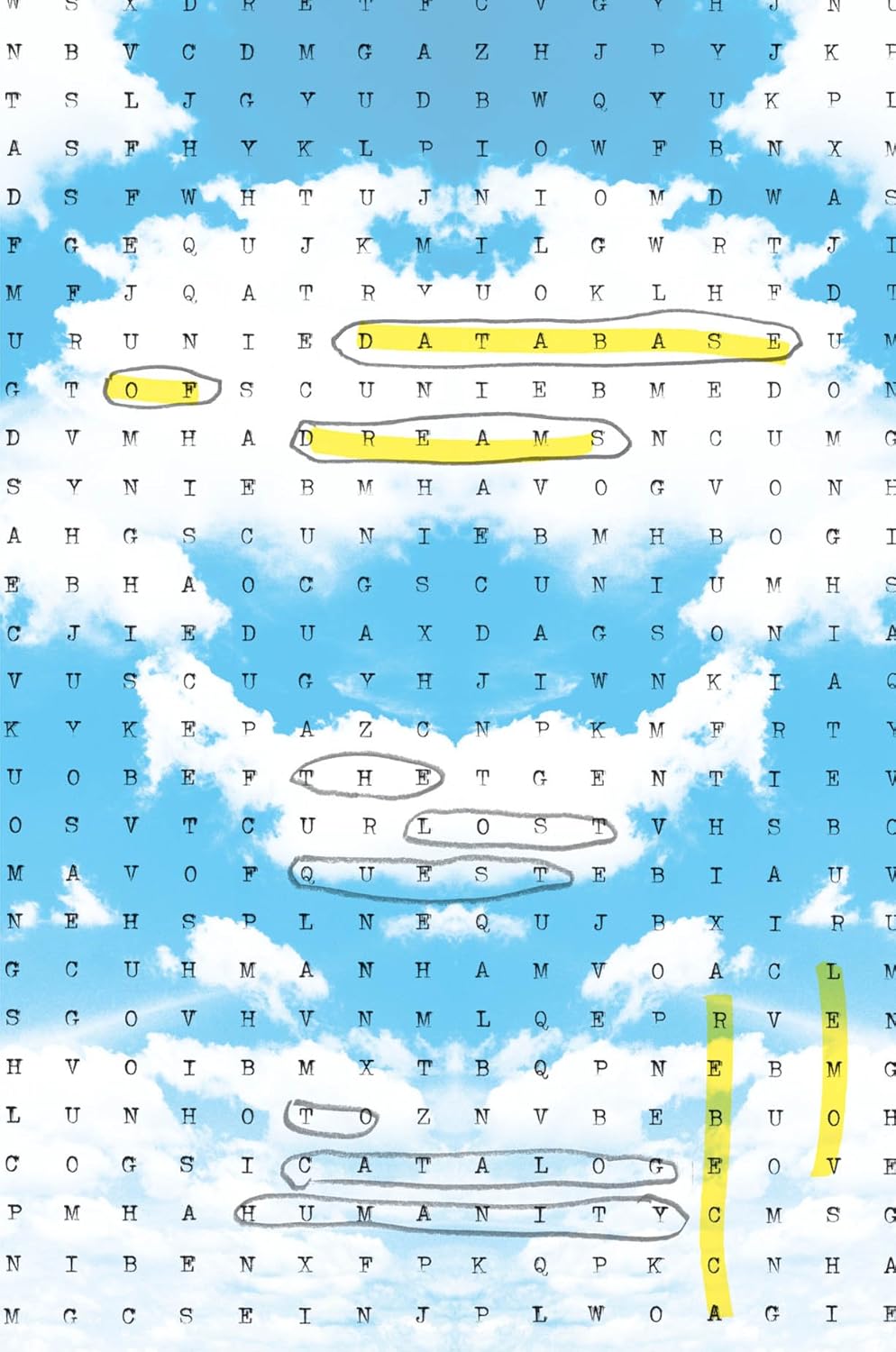
Database of Dreams
The Lost Quest to Catalog Humanity
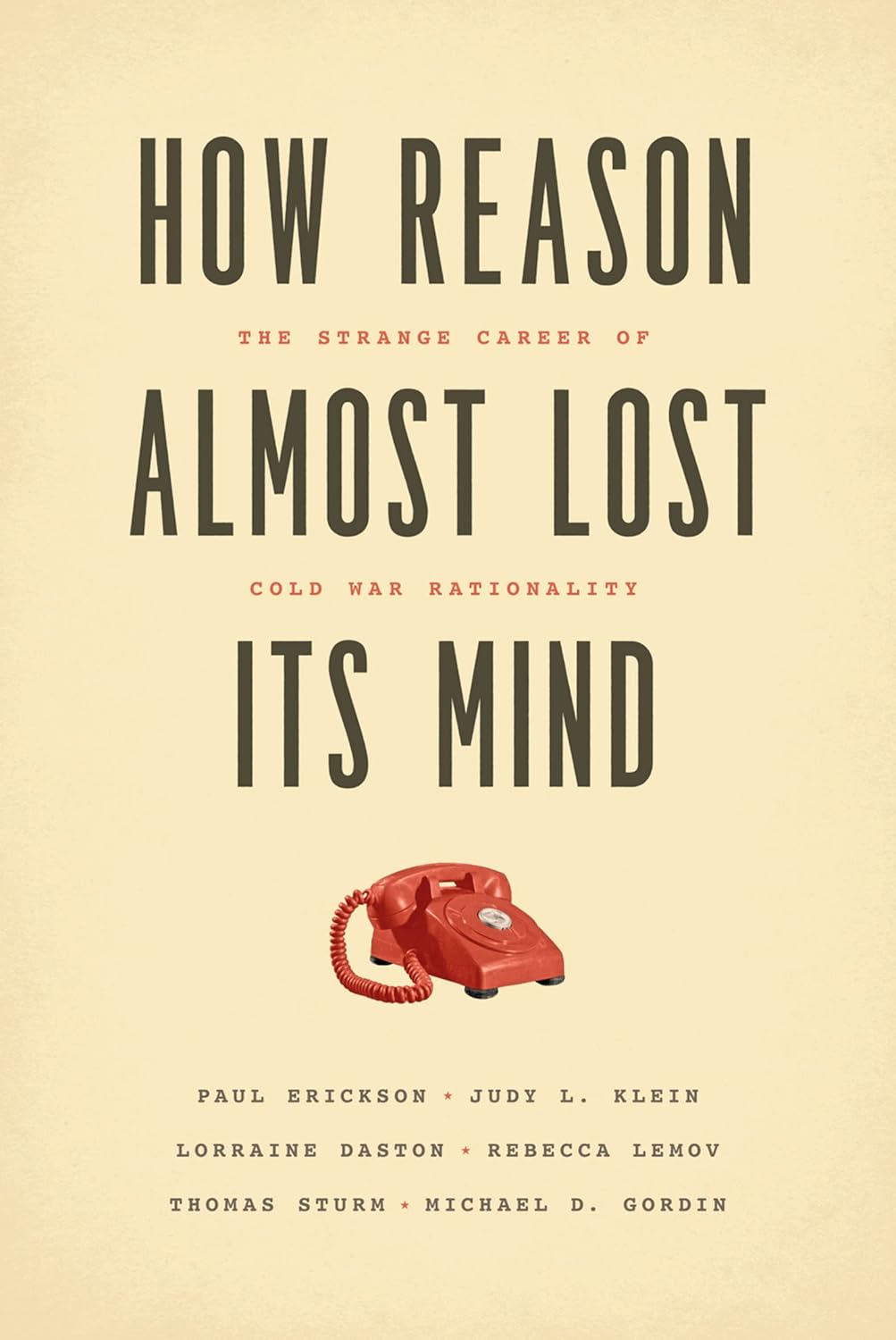
How Reason Almost Lost Its Mind
The Strange Career of Cold War Rationality (co-authored)
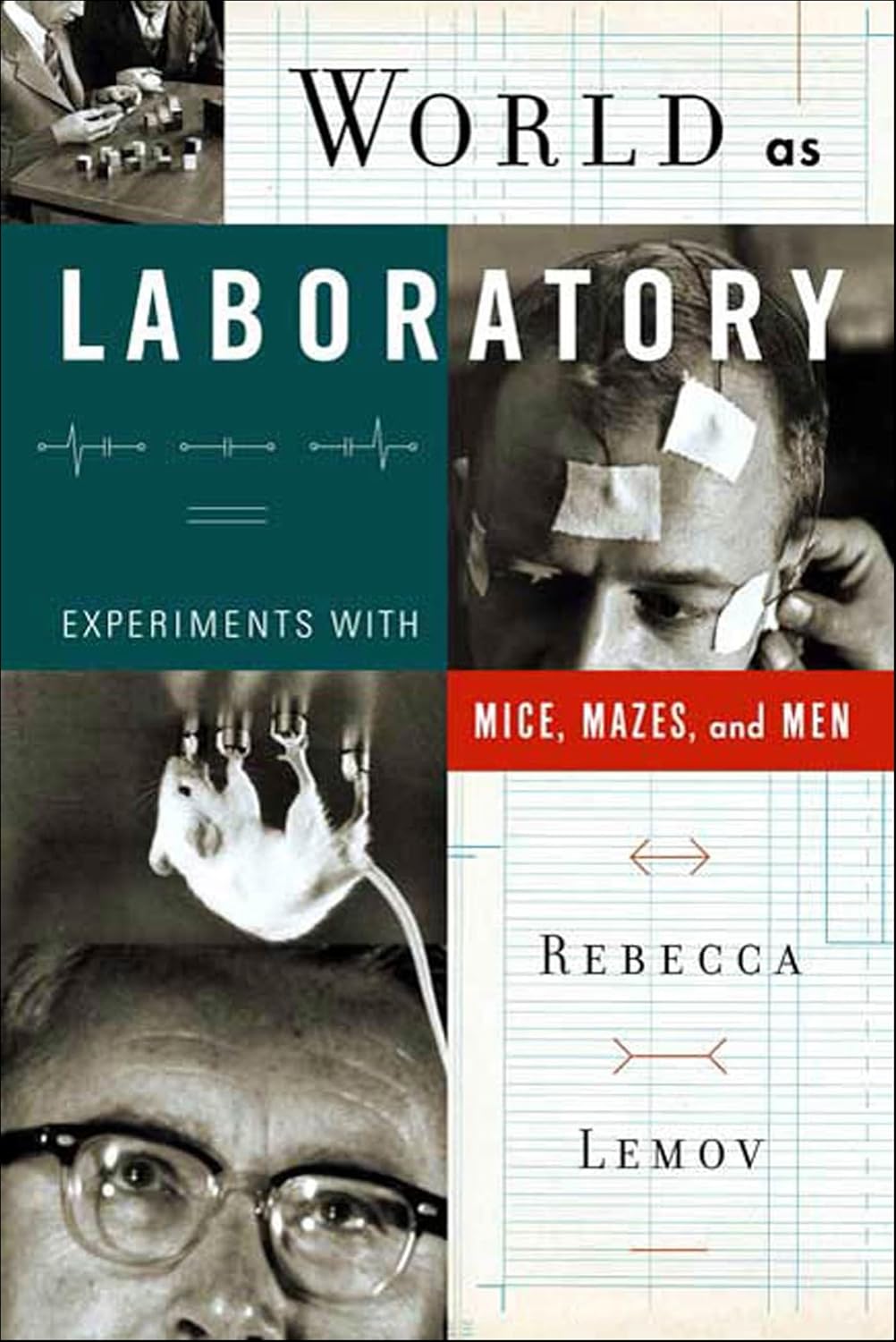
World as Laboratory
Experiments with Mice, Mazes, and Men
Editorial Reviews
The Instability of Truth
- “A superbly crafted analysis of a universally deplored but seemingly irresistible technique.” — Kirkus Reviews
- “Thoughtful, well supported… Offers vivid snapshots of individual cases.” ― Leah Greenblatt, New York Times
- “If the lessons of history in Lemov’s book coupled with the ongoing insights of the political neuroscientists are even half right, we should all be paying very, very close attention.” ― Liz Else, New Scientist
View full editorial reviews for The Instability of Truth.
Database of Dreams
- “Unique, well-curated brain food for readers intrigued with the human psyche and how it can be recorded, indexed, and cross-referenced.” — Kirkus Reviews
- “Lemov’s contribution informs our understanding… of our own daily contributions, voluntary and otherwise, to a 'forever' database already being probed in increasingly intimate fashion” —Psychology Today
- “Lemov recollects with flair, affection, and dazzling detail… Riveting.” —New Republic
View full editorial reviews for Database of Dreams.
How Reason Almost Lost Its Mind
- “The inhuman assumptions of the postwar human sciences form the problematic for this fascinating book… the Cold War arms race appears here as the uniquely disturbing frame for a wide-ranging campaign to extirpate irrationality…” ― Theodore M. Porter, University of California, Los Angeles
- “This masterly book makes a crucial contribution to understanding of Cold War thought, opens many new avenues for further research, and raises important questions about the durability of Cold War thinking in contemporary American social science.” ― Journal of American History
- “Broadly revelatory… the authors show how dangerous our behavioral scientists might have been, co-opted into military and political decision-making in crisis situations just as physicists were co-opted into the construction of the bomb.” ― Mary S. Morgan, London School of Economics ― Science
View full editorial reviews for How Reason Almost Lost Its Mind.
World as Laboratory
- “Lemov, a historian and anthropologist, addresses nearly a century of study into ‘human engineering’… her historical argument is both eye-opening and persuasive.” ― From Publishers Weekly
- “A balanced account of the behaviorists’ crusade, Lemov’s history provides crucial backstory to contemporary practices in psychology and mass media.” ― From Booklist
- “Why wouldn't it be possible to build environments that would constructively reshape the mind? This question is at the center of Rebecca Lemov's absorbing history of human engineering.” ― David Brooks, New York Times Book Review
View full editorial reviews for World as Laboratory.
Sample Interview Questions
(Useful for podcasters, journalists, or event hosts)
- You’ve been studying mind control and brainwashing for decades. What sparked your interest in this subject?
- How do you define brainwashing?
- When does the term “brainwashing” first appear?
- What are the key conditions that need to be in place for brainwashing to occur?
- How have brainwashing and mind control been portrayed in pop culture?
- American POWs suffered through unimaginably brutal conditions during their captivity in North Korea. Can you briefly explain the "Method" of Maoist reeducation and how those terrible living conditions contributed to brainwashing?
- At the end of the Korean War, twenty-one American soldiers defected to China. How were they viewed by the American public and government?
- You write about your personal experience with the Astro-crypto community. How is the cryptocurrency world cultish?
- How can we protect ourselves from brainwashing and hyper-persuasion in our digital world of today?
- Why did you decide to title your book The Instability of Truth?
- Why did you decide to write yourself into the book?
- Have you ever personally been brainwashed or experienced mind control?
- How do past psychological experiments shape the way we live now?
- Why do you say that “brainwashing is more common than we think”?
- What role does humor play in writing about such dark material?
In the Media
Featured on Armchair Expert, NPR’s On Point, and other top podcasts and radio programs.

The Daily Stoic
What makes everyday people vulnerable to influence, even when they feel in control.

The Danny Jones Show
Harvard’s #1 Mind Control Expert fears MK-Ultra is STILL active, influencing courts & digital spaces

The Michael Shermer Show
Brainwashing is more common than we think, affecting anyone through various control techniques.
Speaker Assets
For event planners and partners, here are the essentials about my talks and presentations — ready to use in programs, promotions, or event materials.
Short Speaker Bio
Rebecca Lemov is a historian and anthropologist whose work uncovers the hidden systems shaping human thought and behavior. A professor at Harvard University, she speaks on topics ranging from the history of brainwashing to the rise of behavioral science and digital persuasion. Her keynotes and workshops connect past experiments to present realities, helping audiences see how unseen forces influence everyday decisions — and how to respond with clarity, insight, and agency.
Extended Speaker Bio
Rebecca Lemov is an author, historian, and anthropologist who brings complex histories of science and psychology to life for public, professional, and academic audiences. A professor of the History of Science at Harvard University, she investigates experiments designed to control thought, measure behavior, and redefine truth — from Cold War rationality campaigns to the data practices that shape our digital lives.
Her latest book, The Instability of Truth: Brainwashing, Mind Control, and Hyper‑Persuasion, traces how classic techniques of coercive persuasion reappear in modern media environments. She is also the author of Database of Dreams: The Lost Quest to Catalog Humanity and World as Laboratory: Experiments with Mice, Mazes, and Men, and co‑author of How Reason Almost Lost Its Mind: The Strange Career of Cold War Rationality. Across these works, Lemov mines overlooked archives and human stories to reveal systems that influence everyday decisions.
On stage, Rebecca combines deep research with accessible storytelling and humor. Her keynotes and workshops help audiences recognize manipulation, build practical habits of critical thinking, and respond to uncertainty with clarity, insights, and agency. She has shared her work on leading podcasts and radio programs and has spoken at institutions such as Harvard University, the Max Planck Institute for the History of Science, and the Library of Congress.
Speaker Photos
Click an image to enlarge. Right-click and select “Save image” to download.
Speaking Topics
The History — and Future — of Brainwashing
What once seemed like a Cold War curiosity has become an everyday reality. Rebecca traces the hidden history of brainwashing and shows how techniques of persuasion, manipulation, and control shape our digital lives today.
The Instability of Truth
Truth is not as stable as we think. Drawing on decades of research, Rebecca reveals how shifting systems of knowledge — from postwar rationality to today’s data-driven culture — redefine what we accept as “real.”
The Database of Dreams
An archive of human dreams from the mid-20th century opens a window into the human psyche and the ambition to catalog and control it. Rebecca tells the strange story of this experiment — and what it reveals about data collection now.
How Reason Almost Lost Its Mind
In the Cold War years, the quest to impose rationality on human thought transformed science, policy, and even culture. Rebecca explores what this campaign left behind — and why its legacy matters today.
Hidden Systems, Everyday Decisions
From consumer surveys to political polling to targeted advertising, invisible forces shape how we think and act. Rebecca helps audiences recognize these systems and respond to them with clarity.
Testimonials
A Rare Combination of Warmth, Insight, and Presence
Over the years, I have had the pleasure of watching R. speak...One of the Few Scholars Who Can Trace the Full History of Mind Control
I interviewed Rebecca for a documentary on the history of...Speaking Highlights
Rebecca has spoken at leading institutions and events, including:
- Harvard University
- University of Michigan
- University of Pennsylvania
- University of Toronto
- University of Cambridge
- Humboldt University of Berlin
- Claremont Colleges
- Huntington Library and Gardens
- Max Planck Institute for the History of Science
- Library of Congress
- Cascade Ideas Festival
- Boston Book Festival
- The University of Tokyo
- ETH in Zurich
AV / Tech Requirements
To ensure the best experience for audiences, please provide:
- Microphone: Wireless lapel (lav) microphone preferred; handheld as backup.
- Projector & Screen: For slide presentations (HDMI connection).
- Laptop Access: Rebecca will bring her own laptop and adapter, or provide slides in advance.
- Podium/Stand: For notes and water.
- Recording: Audio/video recording permitted with prior approval.
Rebecca is flexible and happy to work with event staff to adapt to venue needs.
Contact & Booking
Ready to book Rebecca for your event or interview?
Visit the booking page for speaking inquiries, media requests, or collaborations.